
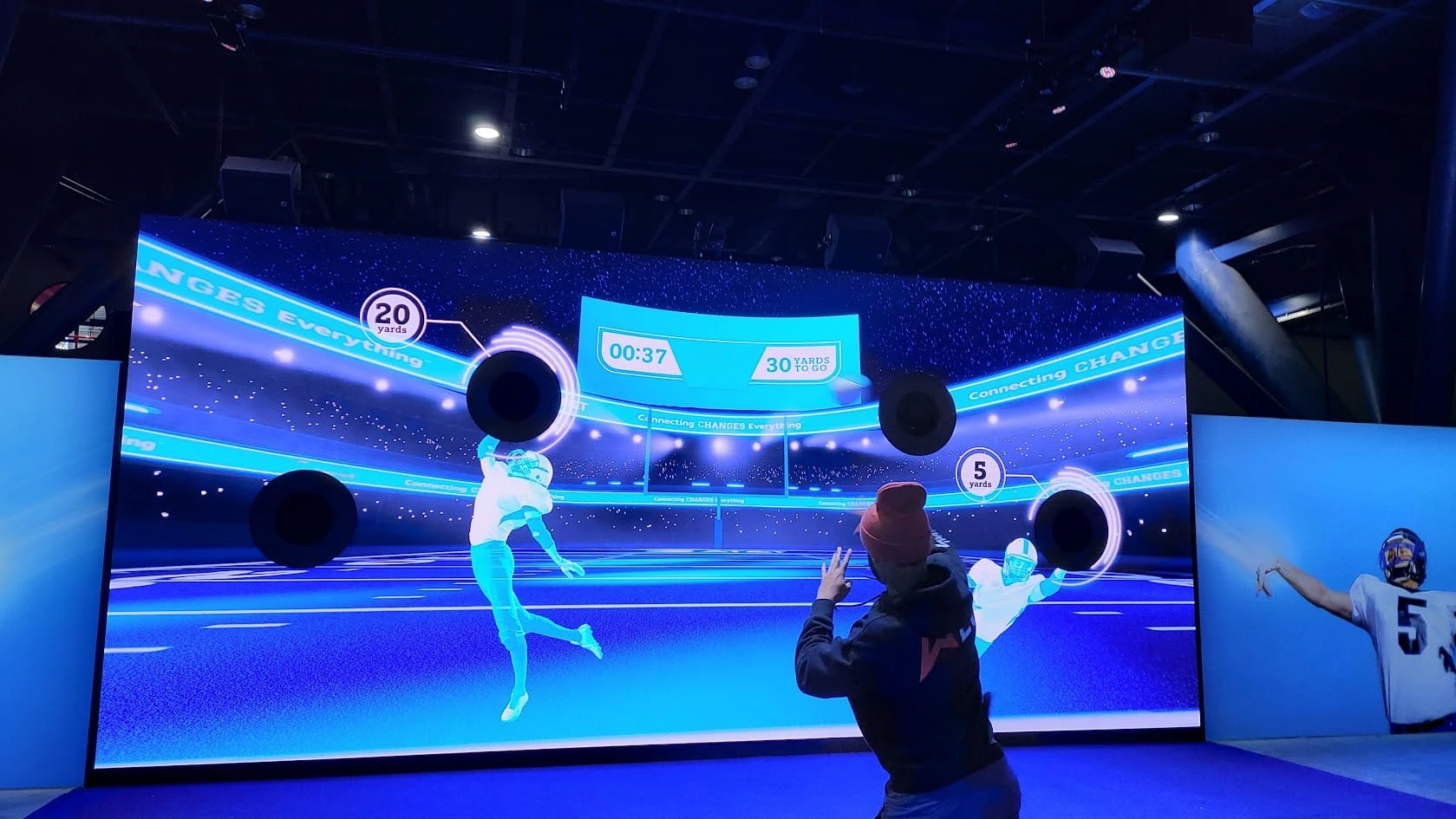
Sponsor Activation Environments is an environment decision. It changes how people encounter the brand, how staff hold conversations, and how much production effort is justified to support the event objective.
For the environments, a registration environment, a sponsor activation, a demo zone, and a museum-style installation, a sponsor activation, a demo zone, and a museum-style installation all ask different things of the same event team. They should not be briefed with interchangeable language.
Sponsor Activation should therefore be planned around the attendee behavior it needs to create, the amount of technical or scenic support it truly requires, and how the environment will be transported, maintained, and closed out in Charleston.
On Sponsor Activation Environments, that keeps the work grounded in execution rather than in style alone.
For the environments, Charleston is a strong market for this kind of distinction because venue tone changes so much between convention halls, downtown properties, waterfront spaces, and coastal-event settings.
For Sponsor Activation Environments, when the exhibit type and the room match, the whole program feels more deliberate.
What drives the Charleston calendar
For the environments, Charleston runs one of the busiest trade show calendars in the region. Convention weeks stack close together, hotel blocks compete for the same nights, and the venues themselves shape what is possible on the floor.
For the environments, trade show weeks in Charleston compress decisions. Dock windows are finite, rigging slots fill fast, and the labor calendar around a citywide conference runs hot. Exhibitors who treat planning as optional lose time they do not get back.
For the environments, Charleston International Airport has nonstop service to 50 destinations in the U.S. And Canada — a useful reference point when sizing a project.
For the environments, Meet Charleston highlights I-26 and US 17 as the core highway approaches into the market, which sets the practical ceiling for a booth program working the market.
The buildings that host Charleston events
Across the environments, different Charleston venues mean different floor plans, different labor rules, and different freight realities.
For the environments, a venue walk — either in person or via the published floor plan — is the step that reveals constraints no spec sheet shows. Column spacing, real ceiling height at the grid point, and dock access shape what is actually buildable.
For the environments, North Charleston Coliseum is one of the anchors. Meet Charleston identifies the Coliseum as part of the Charleston Area Convention Center campus and booking ecosystem.
The campus guide places the Coliseum at 5001 Coliseum Drive with direct regional routing via Montague Avenue, International Boulevard, I-526, and the airport interchange.
North Charleston Performing Arts Center: the campus guide routes PAC access through the same 5001 Coliseum Drive complex and Montague Avenue convention district.
Lowcountry Conference Center. Current venue materials list the venue at 406 Sigma Drive in Summerville.
How Charleston floor operations work
On the environments, labor in Charleston runs venue-by-venue, not citywide. Each building publishes its own rules for who handles what on the floor.
For the environments, that means pulling the current exhibitor manual for every show and confirming a handful of items in writing: which tasks the venue's house crews cover, which tasks the show's general contractor covers, and what an exhibitor or their appointed contractor can handle without escalation.
For the environments, The Cedar Room and Mercantile and Mash are the exclusive catering and bar service for the venue.
Practical planning rules for the environments in Charleston: Downtown and waterfront venues in Charleston often use approved-vendor or in-house hospitality models for food, beverage, technical support, or event management. When this site references labor, rigging, utilities, catering, or decorator flow, the goal is to help buyers plan around verified venue behavior rather than assume last-show conditions still apply.
Where Charleston shows cluster
Historic Charleston Peninsula covers Charleston, Downtown Charleston, Charleston Peninsula, Upper King.
For the environments, the Barrier-Island Resort Corridor runs across Isle of Palms, Sullivan's Island, Kiawah Island.
Scope on a sponsor activation environments project
The environments projects typically include design work, fabrication or rental sourcing, graphics production, show-service paperwork, freight, install, show-hours coverage, and strike.
On a the environments build, typical line items include booth structure (custom or rental), graphics and print, AV and lighting, show-service orders (power, internet, rigging), labor calls against the venue's rules, freight both ways, on-site supervision, and post-show closeout documentation.
A bad one has many, because they were not.
On the environments, out of scope by default are show organizer fees, booth lease costs paid directly to the show, staff travel and per diems, and any custom software or data-capture tooling the client runs on its own stack. Those stay on the client side and plug into the project through coordination, not rebilling.
How a project runs
Everything downstream hinges on those answers.
Once the environments scope is clear, the venue work begins. Exhibitor manual, dock times, utility order IDs, rigging submissions for hanging elements, and labor calls all get locked against the venue's actual rules.
On the environments, production covers fabrication, graphics, AV spec, rentals, and crew chief assignment. It is the longest phase of most projects and the one where timelines are either protected or lost.
During the environments install, one owner stays on the floor. That person handles the labor calls, the graphics questions, the sequence adjustments, and the daily update.
For the environments, show-hours coverage is part of every engagement, not a premium add-on. On-floor support keeps the booth running while the client team runs the pipeline.
For the environments, strike and closeout happen the same day. Storage labels, outbound manifests, vendor performance notes, and a written debrief go out within 24 hours of doors closing.
What it costs and how fast it moves
There is not a single price. There is a configuration.
On the environments, six variables drive the cost: custom versus rental, booth footprint and complexity, venue-specific labor and rigging fees, graphics scope and substrate, freight distance and timing, and the number of on-site supervision days.
For the environments, a clean schedule starts 4 to 5 months out for custom work and 2 to 3 months for rentals. Shorter lead times are workable but push rush premiums and limit material choices.
How project performance gets measured
A the environments project runs well when install clears the venue's published window, all show services land as ordered, the booth performs across every show day without pulling the client team off pipeline work, and strike clears the dock before the next occupant loads in.
On the environments, client teams sometimes want the booth to carry the pipeline on its own, but the best-performing programs treat the booth as a platform and put real operators on it. On-floor conversation discipline moves the KPIs more than any scenic decision.
How we're built to run your project
For the environments, Trade Show Services of Charleston operates out of Charleston with a full in-house production shop. Custom fabrication, rental inventory, graphics production, and show-site labor live under one roof.
A graphic that needs to be reprinted at 6 a.m.
Across the environments show dates, consistency is the other reason to hire local. The same crew that built the booth runs the install, knows the pack-out, and catches the small things: a missing hardware pack, a graphic edge that needs reseating, a storage crate routed to the wrong bay, without pulling the client team in.
Sponsor Activation Environments planning questions
Do you work at Hotel Bennett?
Yes. Hotel schema and venue guides place Hotel Bennett at 404 King St in Charleston.
How does labor work in Charleston?
It runs venue by venue.
How much lead time is ideal?
Custom builds run best with 16 to 20 weeks of lead time. Rentals take 8 to 12 weeks.
What information kicks off a project?
The show, the venue, the booth number, the dates, and a target budget range. From those, an initial scope and a realistic cost come back within a few days.
Who runs the booth on-site?
One named show-site lead runs the install, the show hours, and the strike. That person carries the floor plan and the punch list from crates to doors and reports up once a day.
Can the booth travel to the next city on our calendar?
Same structure, swappable graphics, standard crates.
What happens if something breaks during show hours?
The on-site lead handles it.