
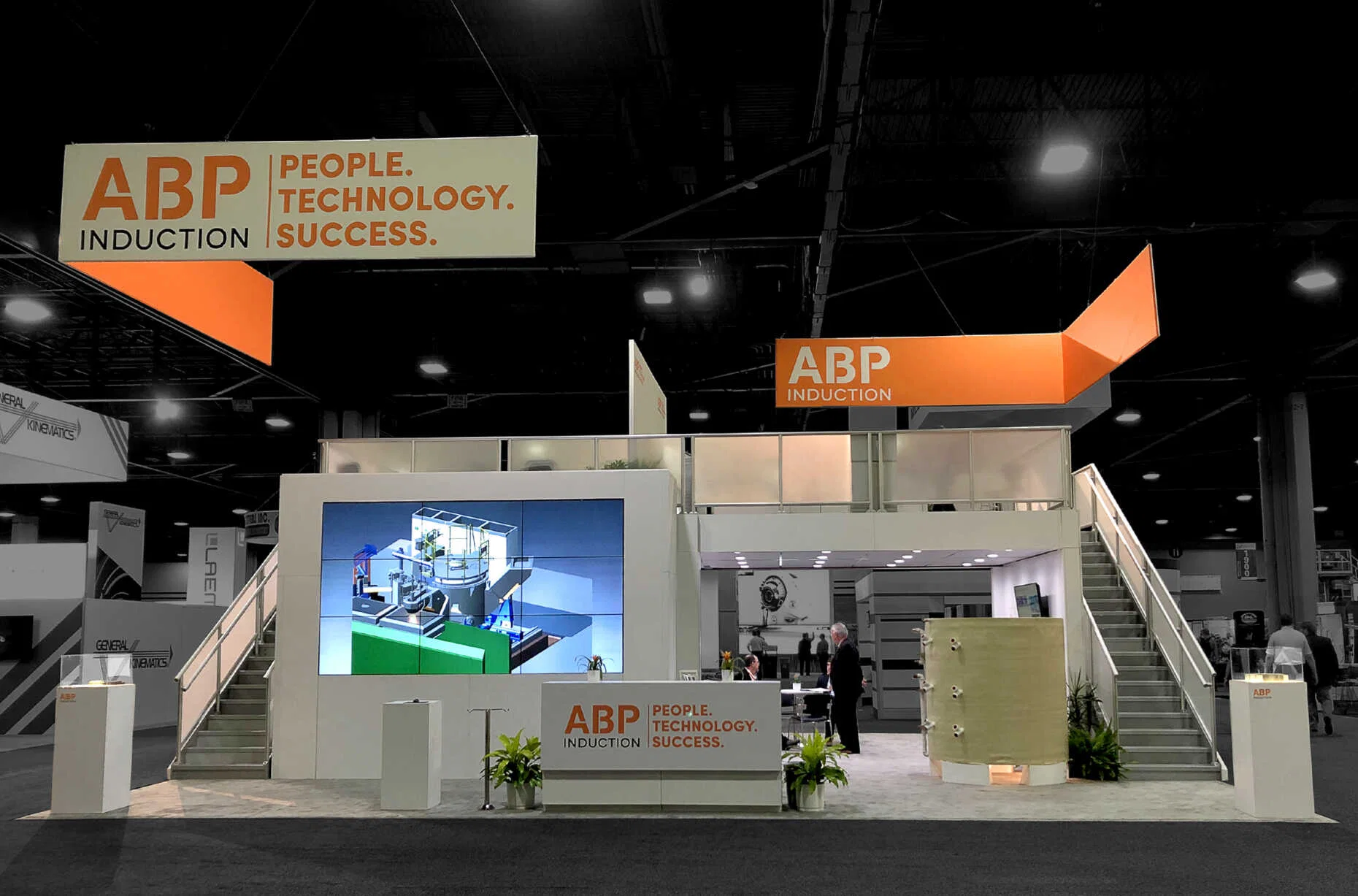
Double-Deck Brand Environments is an environment decision.
For the environments, a registration environment, a sponsor activation, a demo zone, and a museum-style installation, a sponsor activation, a demo zone, and a museum-style installation all ask different things of the same event team. They should not be briefed with interchangeable language.
Double Deck Brand should therefore be planned around the attendee behavior it needs to create, the amount of technical or scenic support it truly requires, and how the environment will be transported, maintained, and closed out in Charleston.
On Double-Deck Brand Environments, that keeps the work grounded in execution rather than in style alone.
For the environments, Charleston is a strong market for this kind of distinction because venue tone changes so much between convention halls, downtown properties, waterfront spaces, and coastal-event settings.
For Double-Deck Brand Environments, when the exhibit type and the room match, the whole program feels more deliberate.
The Charleston event landscape
For the environments, Charleston is a working trade show market.
The audience around the environments varies by show. The floor mechanics stay consistent.
for the environments, the market's main exhibit venue offers 77,000 square feet of exhibit-hall space and nine loading docks.
For the environments buyers, it has 15,000 square feet of exhibit space and is the largest convention facility in the Charleston metro, which sets the practical ceiling for a booth program working the market.
Charleston venues we work
On the environments, Charleston events cluster around a small number of venues, and each one has a different personality on the floor.
For the environments, a venue walk — either in person or via the published floor plan — is the step that reveals constraints no spec sheet shows.
West Beach Conference Center.
Wild Dunes Resort: current meetings materials say the resort is set on Isle of Palms and sits 23 miles from Charleston International Airport.
South Carolina Aquarium is one of the anchors. The Aquarium Galleries and Harbor Overlook accommodate guest counts up to 500.
How we're built to run your project
For the environments, Trade Show Services of Charleston operates out of Charleston with a full in-house production shop.
On the environments, local fabrication means real-time problem-solving. A graphic that needs to be reprinted at 6 a.m.
Across the environments show dates, consistency is the other reason to hire local.
Operational rules on the Charleston floor
On the environments, Charleston floor operations follow the venue's own manual.
For the environments, that means pulling the current exhibitor manual for every show and confirming a handful of items in writing: which tasks the venue's house crews cover, which tasks the show's general contractor covers, and what an exhibitor or their appointed contractor can handle without escalation.
For the environments, The Cedar Room and Mercantile and Mash are the exclusive catering and bar service for the venue.
Practical planning rules for the environments in Charleston: Venue labor and service expectations vary by property, so current venue instructions should be reviewed before promising any specific outside-scope path.
Where Charleston shows cluster
The Historic Charleston Peninsula area runs through Charleston, Downtown Charleston, Charleston Peninsula, Upper King.
For the environments, the Barrier-Island Resort Corridor runs across Isle of Palms, Sullivan's Island, Kiawah Island.
What's included in the project scope
On the environments, project scope usually spans design, fabrication, graphics, AV, labor coordination, freight, install, show-hours support, and strike.
On a the environments build, typical line items include booth structure (custom or rental), graphics and print, AV and lighting, show-service orders (power, internet, rigging), labor calls against the venue's rules, freight both ways, on-site supervision, and post-show closeout documentation.
On the environments, good execution comes from keeping the team small and the handoffs short.
On a the environments build, the scope boundary is as important as scope inclusion.
What an engagement actually looks like
On the environments, the first step is pinning down the show, the floor plan, the deadlines, and what success actually looks like. Everything downstream hinges on those answers.
Once the environments scope is clear, the venue work begins.
On the environments, production covers fabrication, graphics, AV spec, rentals, and crew chief assignment.
During the environments install, one owner stays on the floor.
For the environments, show-hours coverage is part of every engagement, not a premium add-on.
For the environments, strike and closeout happen the same day.
What it costs and how fast it moves
For the environments, an honest quote itemizes the variables. There is not a single price. There is a configuration.
On the environments, six variables drive the cost: custom versus rental, booth footprint and complexity, venue-specific labor and rigging fees, graphics scope and substrate, freight distance and timing, and the number of on-site supervision days.
For the environments, a clean schedule starts 4 to 5 months out for custom work and 2 to 3 months for rentals.
How project performance gets measured
A the environments project runs well when install clears the venue's published window, all show services land as ordered, the booth performs across every show day without pulling the client team off pipeline work, and strike clears the dock before the next occupant loads in.
On the environments, client teams sometimes want the booth to carry the pipeline on its own, but the best-performing programs treat the booth as a platform and put real operators on it.
Double-Deck Brand Environments planning questions
Do you work at Wild Dunes Resort?
Yes.
How does labor work in Charleston?
It runs venue by venue.
How much lead time is ideal?
Custom builds run best with 16 to 20 weeks of lead time. Rentals take 8 to 12 weeks.
What information kicks off a project?
The show, the venue, the booth number, the dates, and a target budget range. From those, an initial scope and a realistic cost come back within a few days.
Who runs the booth on-site?
One named show-site lead runs the install, the show hours, and the strike. That person carries the floor plan and the punch list from crates to doors and reports up once a day.
Can the booth travel to the next city on our calendar?
Same structure, swappable graphics, standard crates.
What happens if something breaks during show hours?
The on-site lead handles it.