
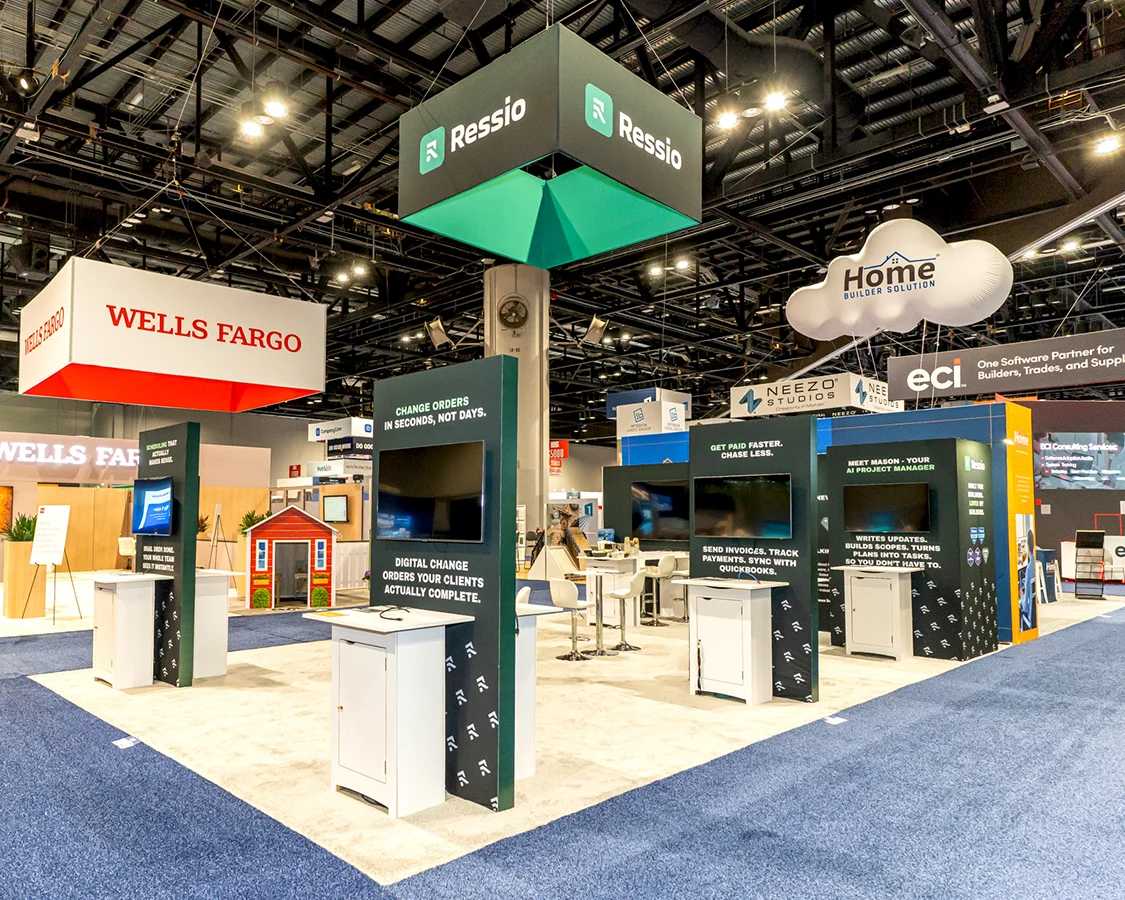
Exhibit Program Management should be judged by whether it makes the event easier to run. In practice, that means it should improve schedule control, venue communication, handoffs between stakeholders, or the clarity of the live sequence once the room opens.
For the management, this capability becomes especially valuable in Charleston because the market spans convention venues, downtown hospitality rooms, suburban conference space, and coastal properties. A team that can stay organized across those shifts creates real client value.
The management is not important because it sounds sophisticated. It is important because it changes what happens when deadlines tighten, service requirements evolve, or the room reveals something the plan did not fully anticipate.
On the management, clients feel the benefit in fewer surprises, cleaner approvals, and an event that feels steadier once the live day begins.
Charleston as a trade show city
For the management, exhibiting in Charleston means working inside an established event ecosystem. The venues, the labor model, and the local production capacity all behave in predictable patterns.
Scope gets tighter, standards do not.
For the management buyers, it has 15,000 square feet of exhibit space and is the largest convention facility in the Charleston metro.
For the management, Kiawah and Wild Dunes both market major meeting inventory, giving Charleston a credible resort-conference layer beyond downtown and North Charleston, which sets the practical ceiling for a booth program working the market.
Charleston convention venues and meeting properties
A few Charleston venues carry most of the calendar.
For the management, a venue walk — either in person or via the published floor plan — is the step that reveals constraints no spec sheet shows. Column spacing, real ceiling height at the grid point, and dock access shape what is actually buildable.
For the management, Kiawah Island Golf Resort is one of the anchors. Current meetings materials say the resort offers 35,000 square feet of conference-center facilities and outdoor spaces for groups.
The resort sits just 21 miles from Charleston and combines that conference center with nearly 90,000 square feet of indoor and outdoor meeting and event space.
For the management, West Beach Conference Center notes that the same meetings section ties the conference-center offer to the resort's 35,000 square feet of conference facilities and larger indoor-outdoor event inventory.
Wild Dunes Resort.
Charleston labor and venue services
On the management, most of what goes wrong on a Charleston install traces back to assumptions about labor. Staying inside the venue's published rules for the specific show prevents it.
On the management, the labor plan takes one call with the venue's exhibitor services desk, one review of the current manual, and one email to the general contractor. Skipping any of those three is usually where problems start.
For the management at the South Carolina Aquarium, the venue uses exclusive catering partners and an exclusive bar partner.
For the management, the North Charleston campus is venue-managed and service-order-driven rather than carrying a blanket citywide labor label. Downtown and waterfront venues in Charleston often use approved-vendor or in-house hospitality models for food, beverage, technical support, or event management.
Where Charleston shows cluster
Daniel Island and East Cooper Extension covers Daniel Island, Cainhoy, Mount Pleasant.
For the management, the Summerville / Nexton Growth Corridor (Summerville, Nexton, Sangaree) — is a different environment. This is the metro's clearest suburban conference and corporate-growth cluster west of North Charleston.
Line items on a typical project
On the management, project scope usually spans design, fabrication, graphics, AV, labor coordination, freight, install, show-hours support, and strike.
On a the management engagement, the budget usually carries structure, graphics, AV, show-service orders through the venue, labor, freight, supervision days, and closeout. Items layer in or drop out based on the management scope.
On the management, good execution comes from keeping the team small and the handoffs short. Every extra vendor in the chain adds a communication layer and a place where details get lost.
On the management, out of scope by default are show organizer fees, booth lease costs paid directly to the show, staff travel and per diems, and any custom software or data-capture tooling the client runs on its own stack. Those stay on the client side and plug into the project through coordination, not rebilling.
The process from start to finish
From those four inputs, a real plan can be built.
After the management brief, the work turns to the building itself. Dock windows, utility orders, rigging approvals, and labor calls are confirmed in writing before anything goes to fabrication.
On the management, production covers fabrication, graphics, AV spec, rentals, and crew chief assignment. It is the longest phase of most projects and the one where timelines are either protected or lost.
On the management, install days are owned by a single on-site lead. That person carries the plan, works the punch list in real time, and reports up once a day with real status.
During the management show hours, the on-site lead stays present. Tech breaks, sponsor changes, venue requests, all handled without pulling the client team off the floor.
For the management, strike and closeout happen the same day. Storage labels, outbound manifests, vendor performance notes, and a written debrief go out within 24 hours of doors closing.
Cost and lead time
Every the management project has the same cost drivers. The number depends on scope, and scope depends on a handful of specific variables.
On the management, six variables drive the cost: custom versus rental, booth footprint and complexity, venue-specific labor and rigging fees, graphics scope and substrate, freight distance and timing, and the number of on-site supervision days.
On the management, lead time drives everything. Custom: 16 to 20 weeks. Rental: 8 to 12.
How project performance gets measured
The measure of a good the management engagement is simple: on-time install, no venue callouts, clean show hours, and a closeout that makes the next event easier to book.
A week after the show, the management build's actual floor performance is already clearer than any pre-show projection. We document those observations alongside the technical closeout so the next cycle inherits real signal, not nostalgia.
Why Trade Show Services of Charleston
On work, having a Charleston-based shop matters most when something goes wrong on-site. Solutions live within driving distance instead of on another coast.
Across the management show dates, consistency is the other reason to hire local. The same crew that built the booth runs the install, knows the pack-out, and catches the small things: a missing hardware pack, a graphic edge that needs reseating, a storage crate routed to the wrong bay, without pulling the client team in.
Exhibit Program Management planning questions
Do you work at Kiawah Island Golf Resort?
Yes.
How does labor work in Charleston?
It runs venue by venue.
How much lead time is ideal?
Custom builds run best with 16 to 20 weeks of lead time. Rentals take 8 to 12 weeks.
What information kicks off a project?
The show, the venue, the booth number, the dates, and a target budget range. From those, an initial scope and a realistic cost come back within a few days.
Who runs the booth on-site?
One named show-site lead runs the install, the show hours, and the strike. That person carries the floor plan and the punch list from crates to doors and reports up once a day.
Can the booth travel to the next city on our calendar?
Same structure, swappable graphics, standard crates.
What happens if something breaks during show hours?
The on-site lead handles it.